
Understanding Current Sales Tax Rates and How They Affect Your Purchases
A surprisingly large number of shoppers don’t realize that the sales tax rate they see at the register is often a blend of state, county, and city percentages stacked together. This rate applies as a straightforward percentage of your purchase total, making it easy to estimate your final cost by simply multiplying the price by the rate. For consumers, the benefit is transparency—you know exactly what you’re paying beyond the sticker price, which helps with budgeting. For businesses, using the correct rate is a simple way to stay accurate in their pricing and keep customer trust.
How Is Your Effective Tax Burden Actually Calculated?

Your effective tax burden with a sales tax rate isn’t just the sticker percentage—it’s what you actually pay after exemptions and spend patterns. Effective tax burden is calculated by dividing the total sales tax you paid by your total taxable purchases, not your full income. For example, if your state’s sales tax rate is 7%, but you buy groceries (often exempt), sales tax calculator your real rate drops because those items aren’t taxed. You only apply the rate to taxable goods, not services or exempt categories. Also, local add-on rates can stack on top, raising your burden. To calculate it, track every receipt: sum all tax charged, then divide by total pre-tax spending—that quotient is your true effective rate, which often differs from the advertised figure.
Breaking Down the Difference Between Nominal and Effective Rates
The nominal sales tax rate is the stated percentage printed on a receipt, but your effective tax burden often differs because it reflects the actual percentage of your total purchase price that goes to tax, excluding exempt items. For example, if a 10% nominal rate applies only to taxable goods, and you buy $100 of goods with $20 exempt, you pay $8 on the $80 taxable portion, making your effective rate 8% of the total. To calculate this accurately:
- Identify all taxable versus exempt items in your transaction.
- Apply the nominal rate only to the taxable subtotal.
- Divide the total tax paid by the full purchase amount.
This distinction matters because deductions, caps, or tiered exemptions can lower your real burden, so never assume the headline rate equals what you actually owe.
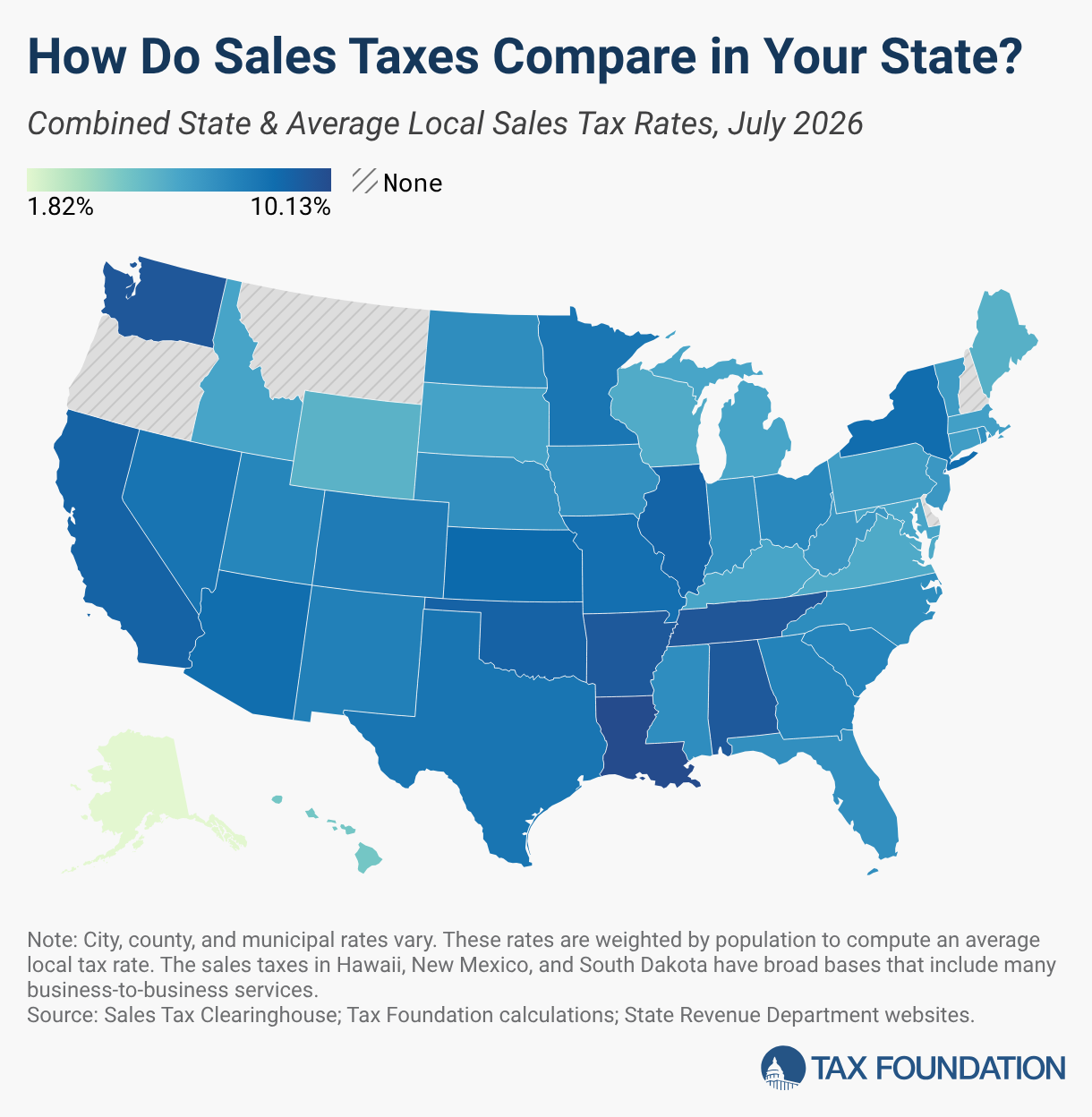
Why Combined State, County, and City Levies Change the Final Number
The final number you see on a receipt rarely matches the state base rate because combined state, county, and city levies each stack independently onto the same taxable purchase. Your effective burden shifts when local jurisdictions impose their own surcharges on top of the state’s fixed percentage. A county’s transit or infrastructure tax and a city’s special district fee are added layer by layer, meaning the same item costs different totals across a one-mile border. Since these local rates are set by separate governing bodies, they change the final number by adding incremental fractions of a percent that accumulate into a surprisingly higher effective sales tax rate. Even minor local additions directly alter the exact amount you pay.
What Determines the Rate You Must Charge a Specific Buyer?
The rate you must charge a specific buyer is determined primarily by the ship-to address, not your business location. You apply the sales tax rate where the buyer receives the goods, which means you must know the exact city, county, and state of that destination. If the buyer’s address is in a state where you have economic nexus, you charge that state’s rate; if you lack nexus there, you charge nothing. Additionally, the buyer’s exemption status changes the rate—if they provide a valid resale certificate, you charge zero. Your product type also matters, as some items are taxed at reduced or zero rates depending on local law. Therefore, the rate you must charge a specific buyer hinges on their location, your nexus, and their exemption documentation.
Pinpointing the Correct Jurisdiction Based on Ship-To and Pickup Locations
For most product sales, jurisdiction is determined by the ship-to address, meaning the tax rate applies where the buyer receives the goods, not where you operate. However, if the buyer picks up the item at your location, the tax rate shifts to your local pickup point’s jurisdiction. The critical nuance emerges with in-state versus out-of-state deliveries: a ship-to address in a different city within your state triggers that city’s specific rate, while a pickup arrangement always uses your physical storefront’s rates. Always verify whether the transaction is deemed “delivered” or “received” at the point of sale to avoid misapplying a destination-based tax.
How Product Type and Digital Goods Shift Your Applicable Percentage
The product you sell directly dictates your applicable percentage because tax laws categorize goods differently. Tangible items like clothing or furniture typically follow your standard state rate, but digital goods shift your applicable percentage by often being treated as services or intangible property. For example, a downloaded eBook may be taxed at a lower rate than its physical counterpart, or entirely exempt. To determine your correct rate for a specific buyer, you must first classify the product type.
- Identify if the item is tangible or digital.
- Check if the digital good is defined as software, streaming, or a download.
- Match that category to your jurisdiction’s specific rate table.
This classification step—not the buyer’s location alone—is what changes your effective rate before you ever apply a zip code.
When Are You Legally Required to Collect a Percentage on a Transaction?
You are legally required to collect a percentage on a transaction—your state’s sales tax rate—the moment you have nexus in that jurisdiction and the item or service sold is taxable. Nexus typically arises from a physical presence, such as a store or warehouse, or from economic activity exceeding a state’s threshold. Once triggered, you must apply the exact rate for the buyer’s ship-to address, not your own, at the point of sale. If you fail to collect, you still owe the tax out-of-pocket, plus penalties.
The legal obligation is tied to where the sale is delivered, not where your business is registered.
For remote sellers, this begins only after surpassing the economic nexus sales or transaction count, after which collection is mandatory on every subsequent taxable transaction.
Understanding the Nexus Triggers That Activate Your Collection Duty
Your collection duty activates only when specific nexus triggers establish a sufficient connection between your business and a taxing jurisdiction. Physical presence—like an office, warehouse, or employee—remains the clearest trigger, but economic activity now counts equally in most states. Once your gross sales or transaction volume surpasses a state’s threshold—commonly $100,000 or 200 transactions annually—you must register and collect its sales tax on every subsequent sale into that state. However, thresholds apply per state, so crossing the limit in one jurisdiction does not automatically create nexus in another, even if sales figures are similar. Marketplace facilitators complicate this further, since they may assume the duty on your behalf, absolving you from direct collection. To avoid retroactive liability, monitor your cumulative sales in each state monthly, as exceeding a threshold mid-year triggers immediate collection obligations, not just at year-end.

Exemptions and Resale Certificates: When You Should Not Add the Charge
You should not add a sales tax charge when the buyer provides a valid resale certificate, indicating the goods will be resold, not consumed. Similarly, exempt organizations—such as registered nonprofits or government entities—presenting a valid exemption certificate remove your obligation to collect the percentage. The charge also applies incorrectly to specific exempt items like unprepared food or prescription medications in many states, even without a certificate. Always verify the certificate’s validity and match the buyer’s name and entity type. If the certificate is expired or clearly irrelevant to the purchase, you remain responsible for adding the tax.
How Do You Select the Right Rate Engine Without Overpaying or Undercharging?
Selecting the right rate engine for sales tax requires matching its precision to your transaction geography, not its highest-tier price. A basic engine with static ZIP-to-rate tables may undercharge for origin-based sourcing or nuanced local jurisdictions, while a premium engine with real-time geocoding and nexus tracking overcharges if your volume is low and locations simple. Evaluate the engine’s coverage matrix against your actual ship-from and ship-to points—if you sell only within single-rate states, a flat-rate calculator suffices; if you cross multiple cities with special districts, you need address-level validation.
The key is to test the engine against a sample of your own historical invoices to see which mismatches occur, then choose the cheapest tier that eliminates those specific errors.
Also, negotiate per-transaction pricing only if your volume fluctuates; otherwise, a flat monthly fee caps your risk. Avoid overbuying by asking for a sandbox trial that simulates your worst-case tax scenario, ensuring you pay for accuracy where it matters, not for features you never trigger.
Comparing Real-Time Lookup Tools vs. Static Tables for Accuracy
When you’re picking a sales tax rate engine, the accuracy battle usually comes down to real-time lookup tools versus static tables. Real-time lookups hit APIs the moment a transaction happens, so they catch sudden rate shifts or new jurisdiction boundaries instantly—great for volatile areas. Static tables, downloaded monthly or quarterly, are faster and cheaper, but they can silently undercharge when a rate changes mid-cycle. For most small businesses, a static table works if you update it religiously, but a **hybrid validation layer**—using real-time checks for high-risk ZIPs—strikes the best balance. You avoid overpaying on stable zones while staying accurate where it matters most.
- Real-time lookups prevent undercharging during unexpected rate hikes or district splits.
- Static tables reduce latency and API costs, but require disciplined refresh schedules.
- Test both against your top 20 shipping ZIPs to see which actually drifts from current rates.
Key Features to Look For: ZIP+4 Precision, Taxability Rules, and Audit Trails
When you’re weighing rate engines, **ZIP+4 precision** is your first guardrail—it locks tax to the exact delivery point, not just the city, so you don’t overcharge on a border street. Next, check how the engine handles taxability rules: does it know that a digital good is taxable in one state but a service isn’t in another? That nuance stops you from undercharging on mixed carts. Finally, make sure every rate lookup leaves an audit trail—timestamps, input addresses, and the rule version used. Without that, you can’t defend a single rate if a customer disputes it.
Q: What’s the fastest way to test ZIP+4 precision and audit trails?
A: Run a sample address that sits on a county line; if the engine’s rate changes with the +4 code and logs the exact lookup, you’re covered. Then, pull a random past transaction and verify you can trace every tax decision back to a specific rule and data snapshot—that’s your audit trail in action.
What Common Pitfalls Inflate or Deflate the Amount You Remit?
Applying the wrong sales tax rate is the fastest way to inflate your remittance, especially when you use a blended “average” rate instead of the exact destination-based rate. Conversely, deflating what you owe often happens when you mistakenly exempt a taxable product because you assume it’s a service, or when you round each line item down instead of the invoice total—these pennies compound fast. Another silent inflator is using yesterday’s rate for today’s transaction, as a city or county may have changed its levy mid-quarter, and your software hasn’t updated. On the flip side, forgetting to include shipping charges in the taxable base will consistently under-remit, since most states treat freight as part of the sale price. Your “taxable” intuition is often wrong, so verify the rate at the exact moment of sale. Finally, don’t calculate tax on a pre-discounted price if your coupon is conditional—this deflates the amount, and auditors will catch it.
Handling Shipping Charges and Discounts in Your Taxable Base

When calculating your taxable base, shipping charges are often taxable if they are part of the sale price, but only if the delivery is to a location within your taxing jurisdiction; separately stated shipping for tangible personal property generally remains taxable in most states unless you have a specific exemption. Discounts, meanwhile, reduce your taxable base only if they are true price reductions at the point of sale, not reimbursements or coupons reimbursed by a third party. If you offer a “free shipping” promotion, you still owe tax on the original product price, not on the reduced amount you collected. To avoid inflating or deflating your remittance, apply any trade discount before calculating tax, and always verify whether your state treats shipping as a taxable service. Accurate handling of shipping and discounts prevents base miscalculations that lead to underpayment or overpayment.
Fixing Errors from Rounding Rules and Threshold-Based Rate Changes
Rounding errors silently skew remittance totals when you calculate per-line tax and then sum instead of applying a single rate to the invoice subtotal. Threshold-based rate changes—like a jump from 6% to 7% once a customer’s annual purchases cross $10,000—demand a precise effective date check. If your system rounds each item to the cent and then round the final amount again, you can drift by dollars quarterly. Fix this by standardizing one calculation method across all transactions. Even a 0.5-cent discrepancy per line becomes a material audit flag when scaled over hundreds of invoices. To correct historical errors:
- Recompute every affected invoice using the correct rate and rounding basis (per-document, not per-line).
- Compare the recalculated tax to what you remitted, flagging any variance over $0.01.
- Adjust the current remittance to absorb the net difference, not per-invoice corrections.
Finally, automate rate-change triggers so they update based on cumulative spending, not manual review, eliminating the most common source of under-remittance.
Recent Comments